


10 insights into the beginnings and development of the Pitter Kornati Cup
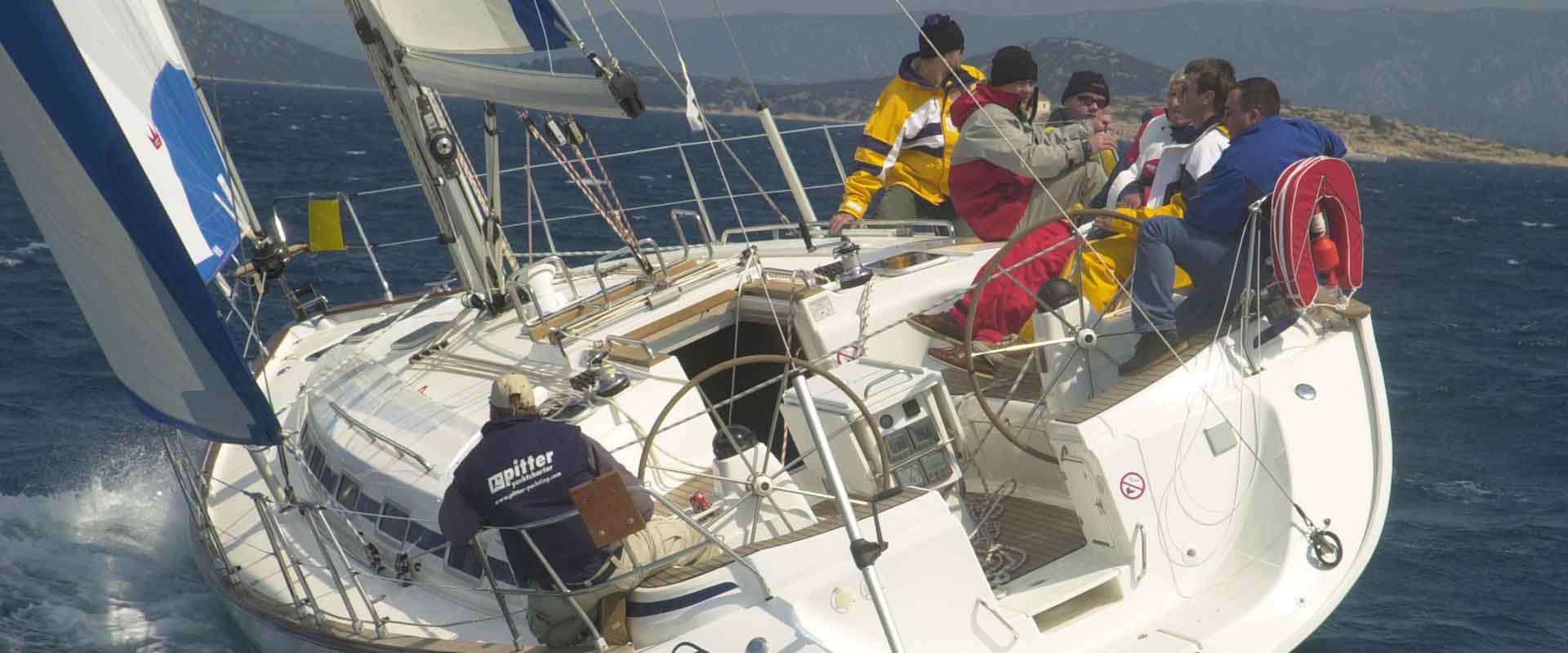
Klaus Pitter shares stories from the early days
Today, the Kornati Cup is regarded as one of the largest and best known charter regattas in the Mediterranean. Yet its beginnings were anything but certain, shaped by improvisation, genuine passion and the unmistakable pioneering spirit of a small adventure.
As the Kornati Cup marks its 25th edition, it is the perfect moment to look back: Klaus Pitter recalls the early years when it all began, and how an idea gradually developed into something that now feels entirely natural.
All information about the 25th Kornati Cup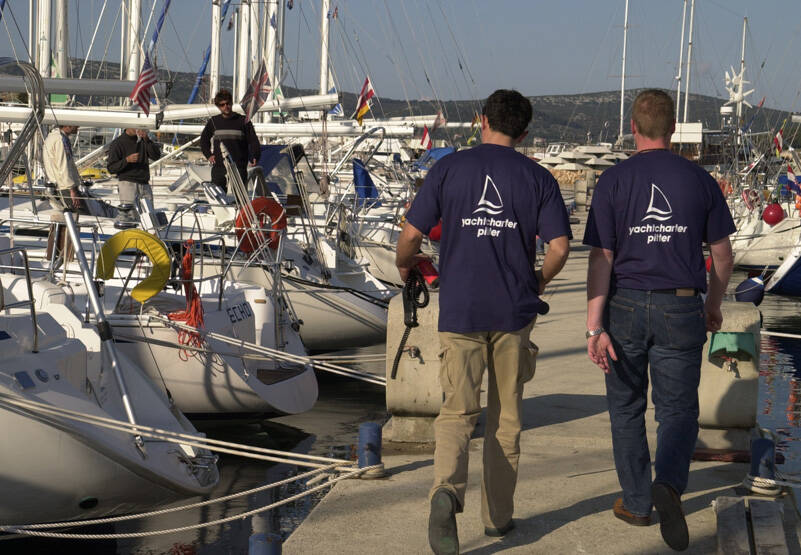
1. It all started with an idea and 16 yachts
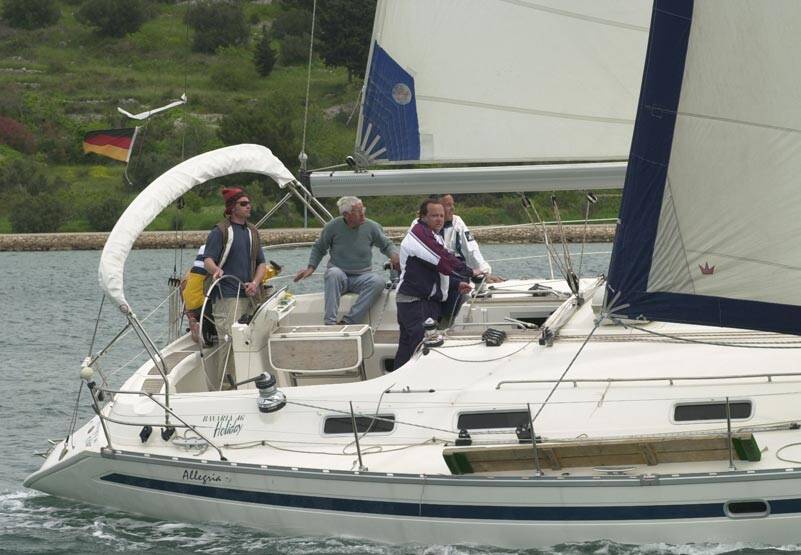
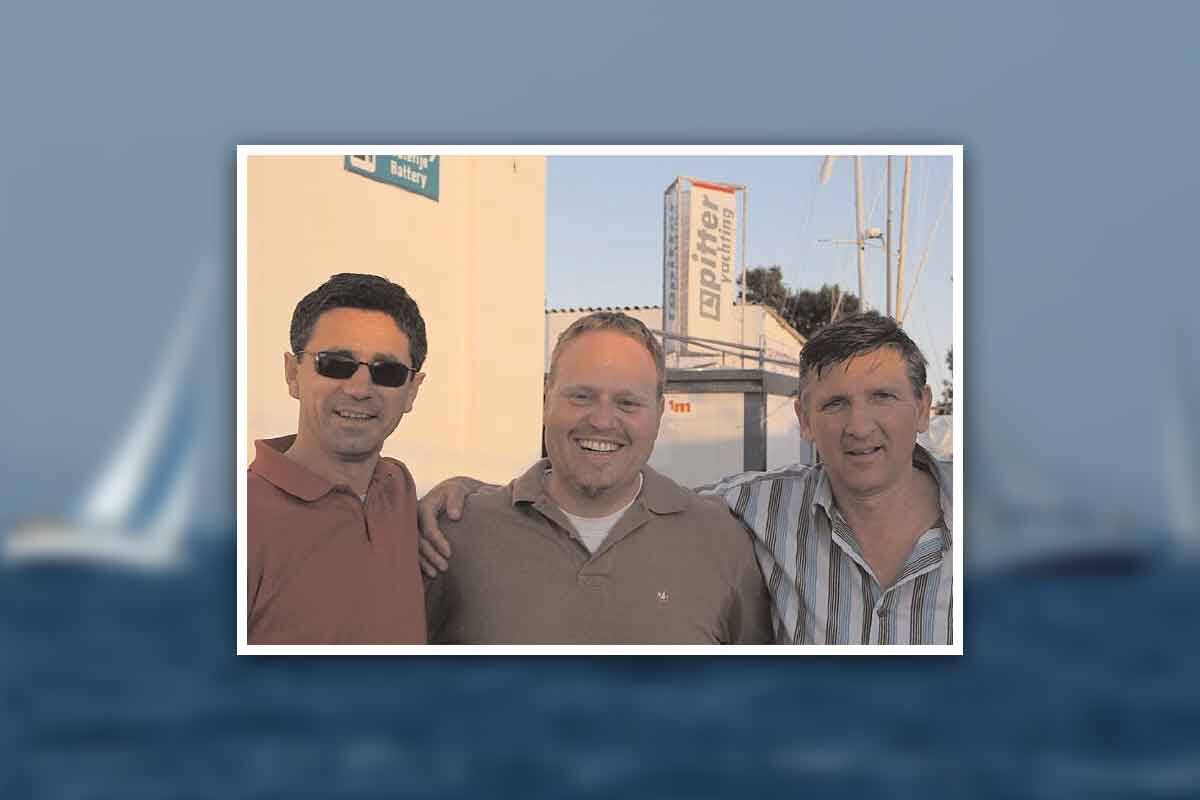
Inspired by the former Murter Kornati Cup, Klaus Pitter revived the Kornati Cup together with his Croatian partners, Marin Katićin and Zeljko Jerat. In 2001, just 16 yachts lined up at the start, five of them directly from the Pitter Yachtcharter base.
"Everyone starts small," Klaus Pitter says in retrospect. But the enthusiasm was there from the very beginning.
2. For many, it was their very first regatta
For many participants, this was their first real offshore regatta, including Klaus Pitter himself. It was less about perfection and far more about the shared experience on the water.
That sense of togetherness, those memorable crew moments, and the combination of sporting ambition with a convivial social programme have shaped the Kornati Cup from the very beginning and continue to define its character today.
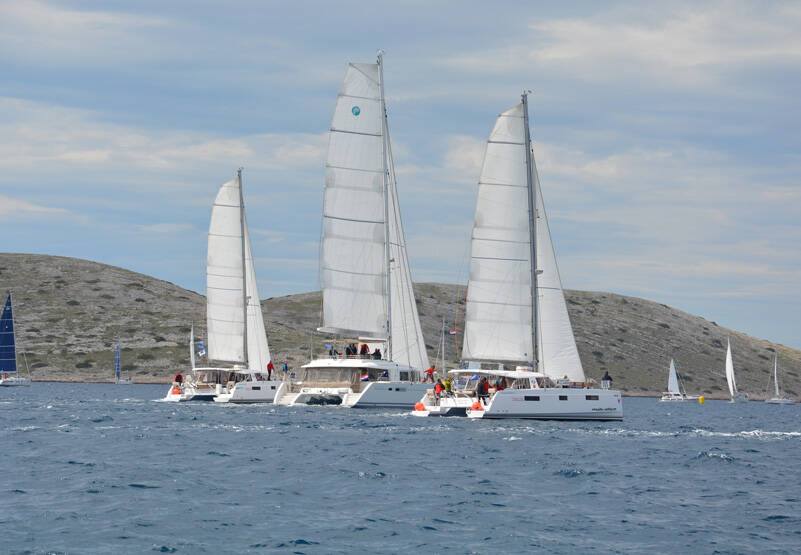
Johann Buchinger, a passionate catamaran sailor, played a key role for many years in establishing a dedicated catamaran group within the Kornati Cup together with a circle of friends and like minded sailors, although this group no longer exists today.
3. By the second year, capacity was already tight
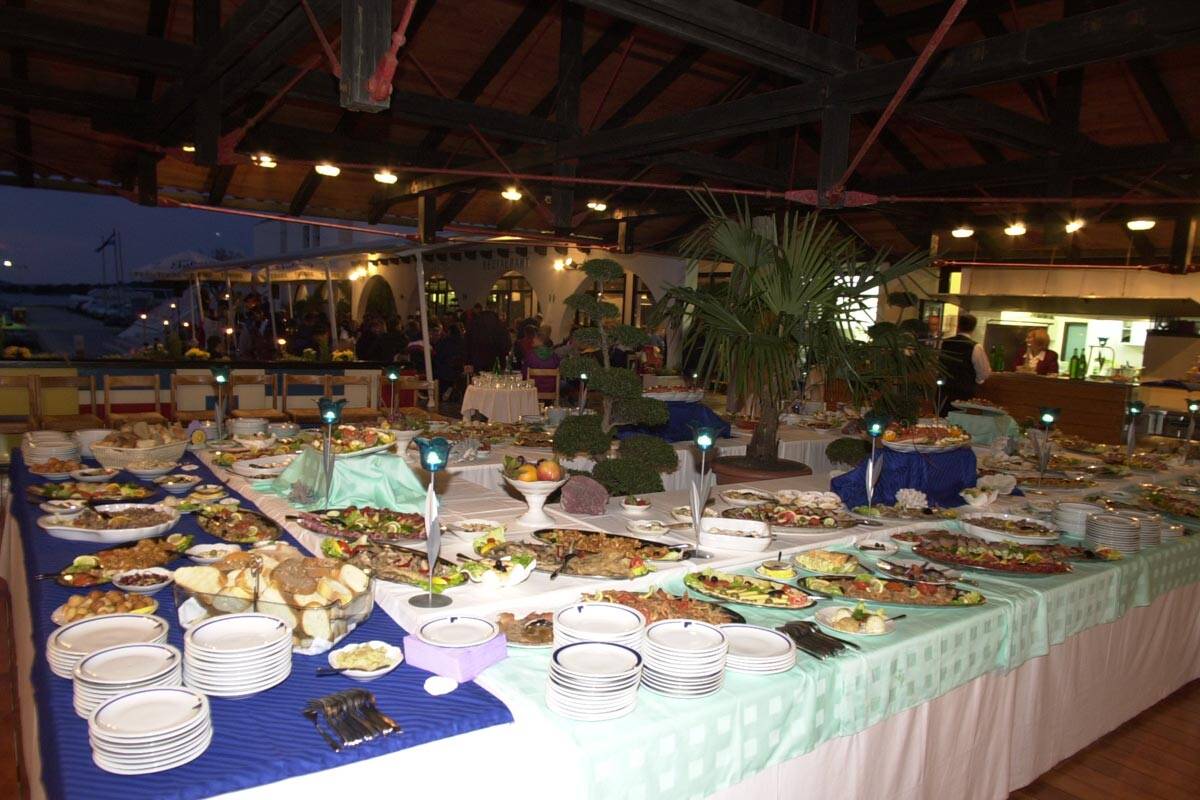
It quickly became clear that the Kornati Cup was growing faster than expected. The marina restaurant, which hosted both the opening celebration and the skippers' briefing, was reaching its limits, so a larger event tent became necessary.
4. From the early years to a well established organisation
By 2003 at the latest, it was clear to see how the Kornati Cup was developing organisationally, with more structure, professional race management and a clear ambition to preserve its warm, family style atmosphere despite continued growth.
In the early days, crew T shirts were still delivered personally from yacht to yacht, accompanied by a welcome drink and a toast to a successful regatta. As participant numbers increased, however, this approach was no longer practical.
The spirit, however, has remained the same: today, crews collect their start numbers, regatta programme and small giveaways together at registration. The process is efficient, yet it is still shaped by personal encounters, a strong sense of community and the now traditional Pelinkovac tasting.
5. Sailing without wind, party instead of racing
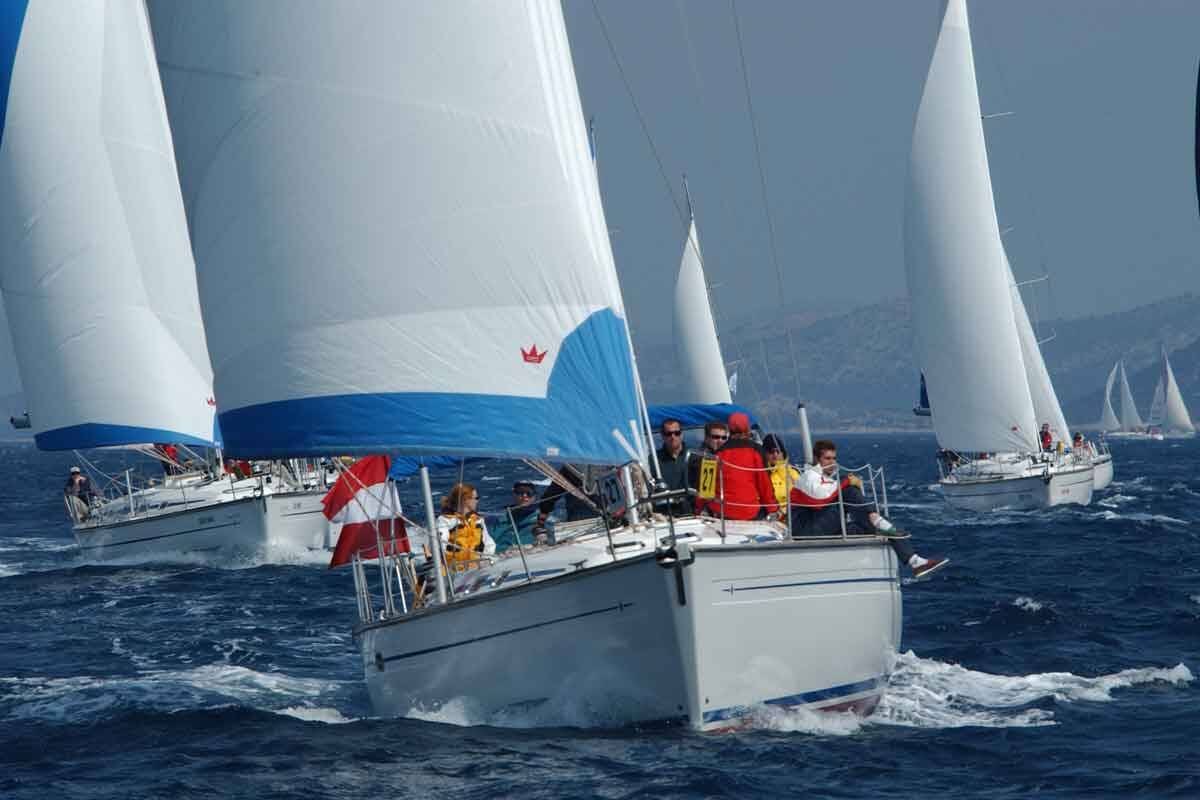
In 2003, the Adriatic revealed a very different side: temperatures above 30 degrees and barely any wind. Across the fleet, the regatta quickly turned into a floating party, especially in Piskera.
6. When the weather became the real opponent
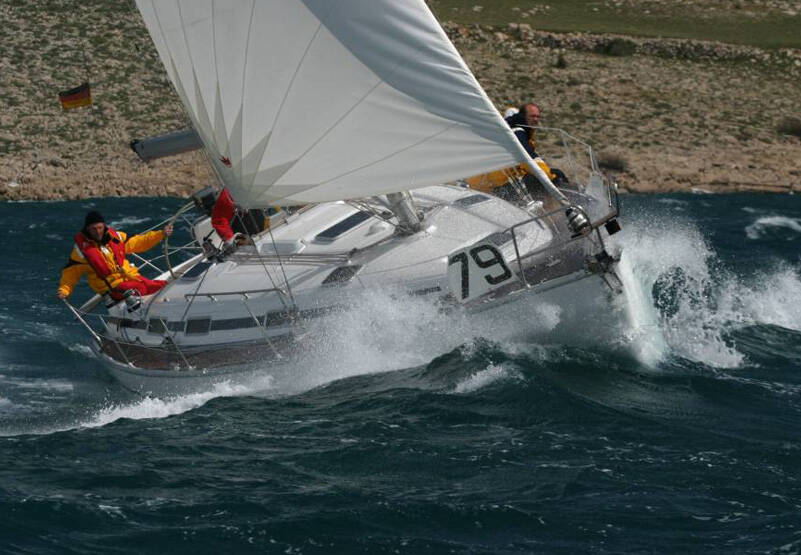
2004 became legendary: a storm in Piskera with Jugo winds of more than 40 knots, followed by a full day at a standstill on the island. Supplies were running low, yet the atmosphere remained truly exceptional.
7. Creating memories, the Kornati Cup's “Nautic Moments”
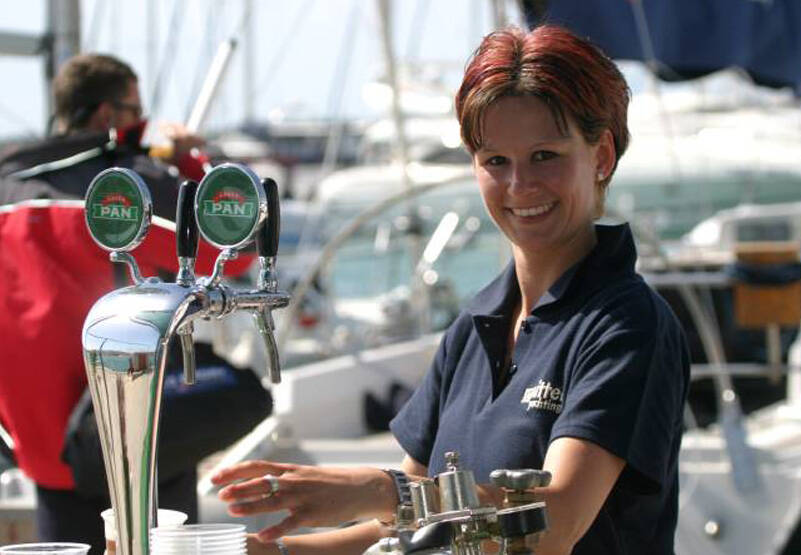
For many, especially those who return year after year, the Kornati Cup is far more than a regatta. It has a unique way of captivating participants and creating lasting memories of special “Nautic Moments”.
From an early stage, preserving these experiences was a priority, long before smartphones made it easy for everyone to capture their own highlights. As early as the third Kornati Cup, there was an initial image gallery, at that time still on VHS video cassette. One year later, it was already available on CDs and DVDs with an automatic slideshow for television screens.
Kornati Cup 2025 photo gallery8. From VHS to print, a living culture of remembrance
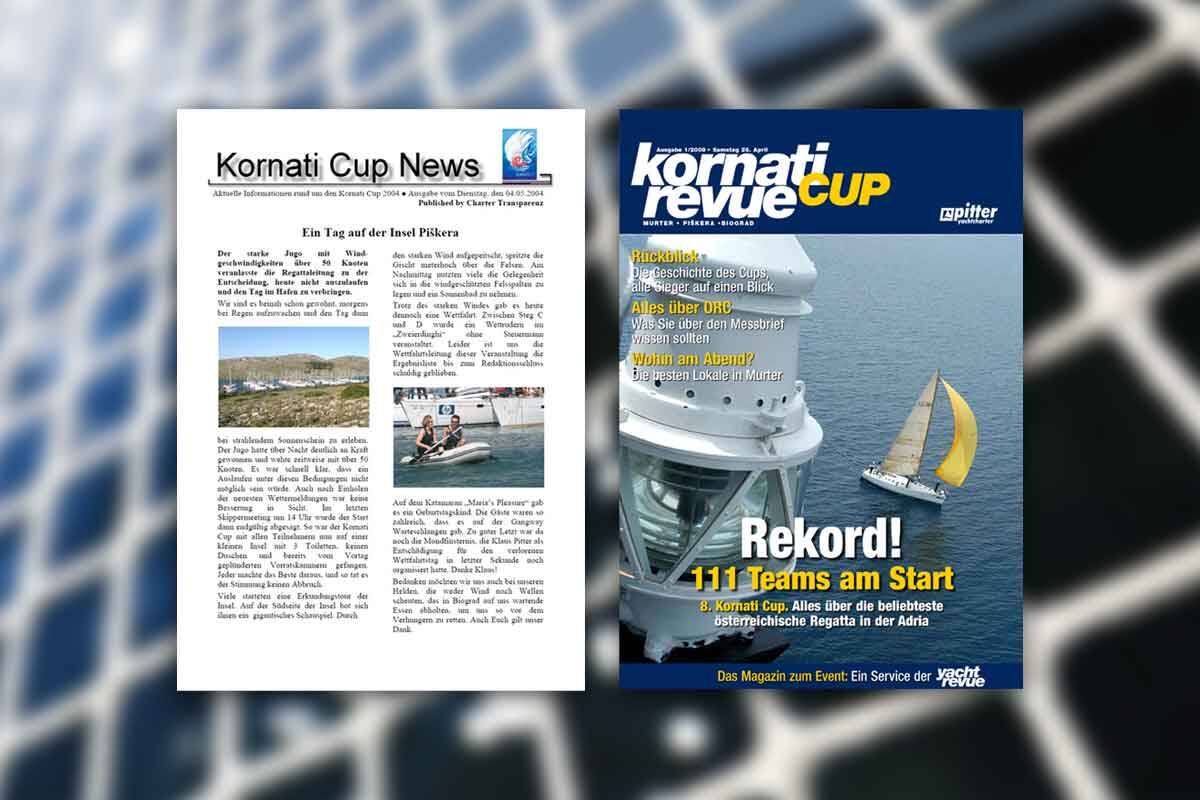
Alongside digital and visual documentation, the printed coverage of the event also developed continuously. What is now readily available online had strong roots in print as well, ranging from the first simple result sheets and information materials to professionally designed publications such as the Kornati Cup News and later the Kornati Cup Revue, which accompanied the event each day over the years as a high quality brochure.
In this way, the regatta was not only experienced on the water but also documented in a tangible form as a lasting keepsake. The design, printing and daily distribution of the newspapers, which appeared early each morning, posed a considerable logistical challenge.
Over time, however, the focus on the newspaper gradually faded into the background, as formats such as the daily Kornati Cup TV and the Kornati Cup film fuelled growing interest in moving images. In the end, the print format gave way to the increasing demand for digital photos and cinematic impressions.
9. Growth at its limits, quality over unlimited expansion
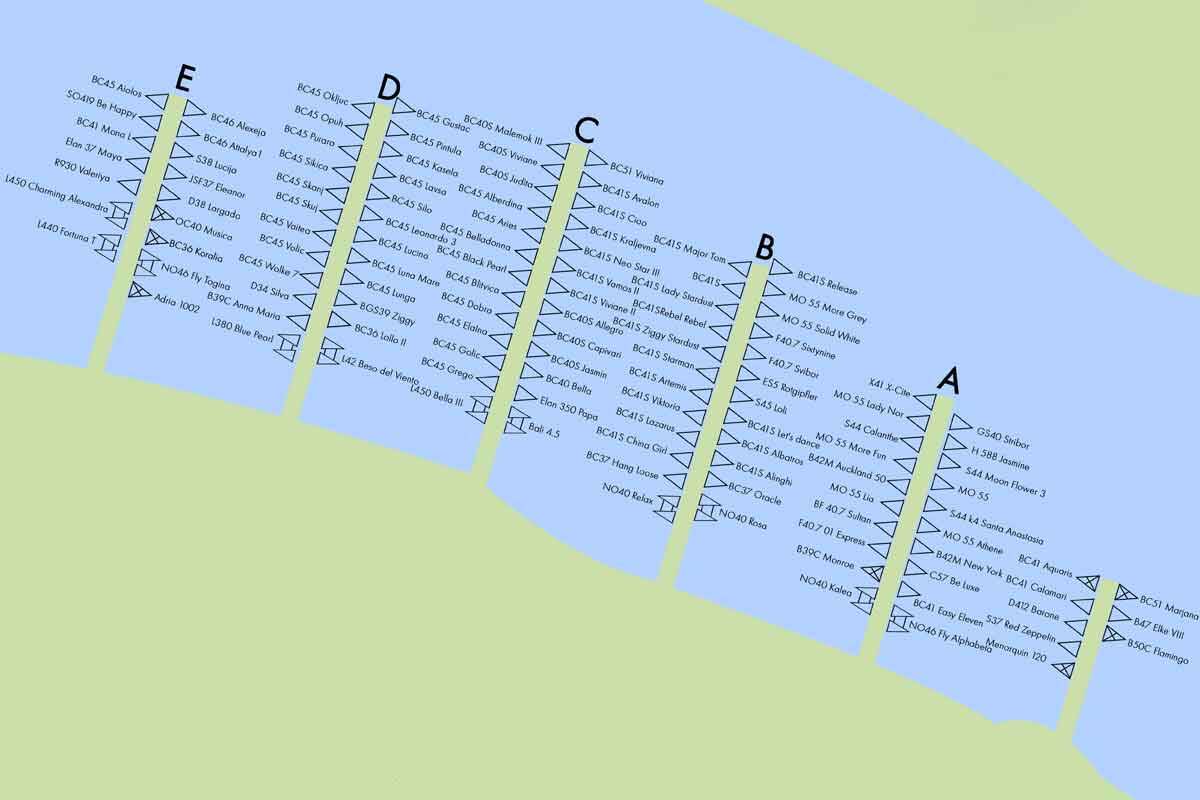
The year 2008 marked a turning point: with 111 yachts on the starting line, the event had reached a scale that was becoming extremely difficult to manage logistically. The limits of what was feasible became clearly apparent, especially in daily route planning, since suitable harbours with sufficient capacity and water depth for such a large fleet are difficult to find.
As a result, the organisers decided to cap participation at around 100 yachts in the future.
10. Changes in Stages and Classes, Setting the Course for Variety and Fair Competition
Route planning and yacht selection have also evolved steadily over the years. The Kornati Cup has repeatedly refined its structure to meet nautical, organisational, and sporting requirements.
The daily destinations were traditionally located in the Kornati archipelago and the surrounding island region, one of the most densely scattered and at the same time most demanding sailing areas in the Adriatic. Depending on the regatta format, different ports and marinas were selected to provide crews with stages that were both sporting highlights and logistically well considered. Choosing these destinations always required a careful balance between sailing distance, safety, berthing capacity, and the distinctive character of the island landscape.
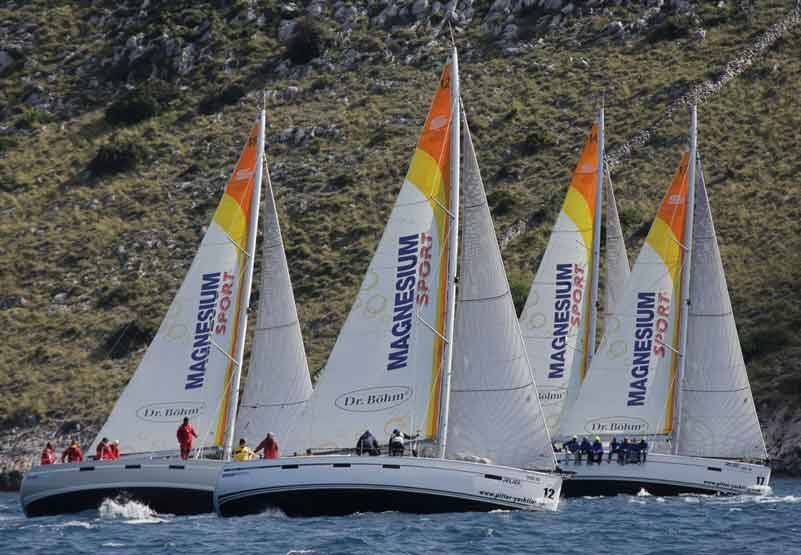
At the same time, so called one design classes became increasingly important. In these classes, all teams compete on largely identical yachts, meaning that rankings are determined not by technical advantages in equipment, but solely by sailing skill, tactical judgement, and teamwork. This created a fairer playing field and made the sporting contest more transparent.
Conclusion: More Than a Regatta
From the very beginning, the Kornati Cup has been far more than a sporting competition. It is a unique blend of sailing, emotion, camaraderie, and the stories each crew creates together.
As Klaus Pitter puts it: “It was never just a regatta. It has always been sailing as a true passion!”
The Kornati Cup is far more than a regatta; it is an experience filled with unforgettable crew moments and demanding sporting challenges. And even when you believe you have already seen every aspect, from mirror calm seas to strong winds, the Kornati Cup continues to surprise year after year.
The event’s distinctive character is just as evident ashore: a varied supporting programme with live bands, DJs, and the legendary evening entertainment ensures that every day ends on a high note. This makes the Kornati Cup an experience that is lived to the fullest, both on the water and on land.
It not only marks the start of the new charter season, but for 25 years it has also stood as a symbol of passion for sailing.
One final important note: for the 25th anniversary, a limited number of starting places are still available due to international cancellations. This is a final opportunity for anyone who has not yet managed to secure their place at the anniversary Cup.
Secure Your Starting Place NowThe Kornati Cup is one of the most famous sailing regattas in Croatia, organized by Pitter Yachtcharter. The regatta combines sporting competition on the water with team spirit and exciting challenges.
The Kornati Cup began as a small sailing regatta in Croatia with just a few crews. Through continuous development and increasing interest, it has grown into an international sailing event with numerous participants and increasing recognition in the sailing community.
The sailing regatta in Croatia impresses with its combination of sporting competition, stunning sailing areas, and a convivial supporting program. Sailing as part of a team and networking with other crews, in particular, make the Kornati Cup a highlight on the sailing calendar.
The Kornati Cup takes place in the Kornati Islands – one of the most beautiful island groups in the Adriatic. The region offers ideal wind conditions and spectacular scenery, making it perfect for a sailing regatta and also for a sailing holiday.
The Kornati Cup is aimed at both experienced regatta sailors and ambitious beginners. Participants can actively sail, test their sailing skills, and be part of an international sailing community.
